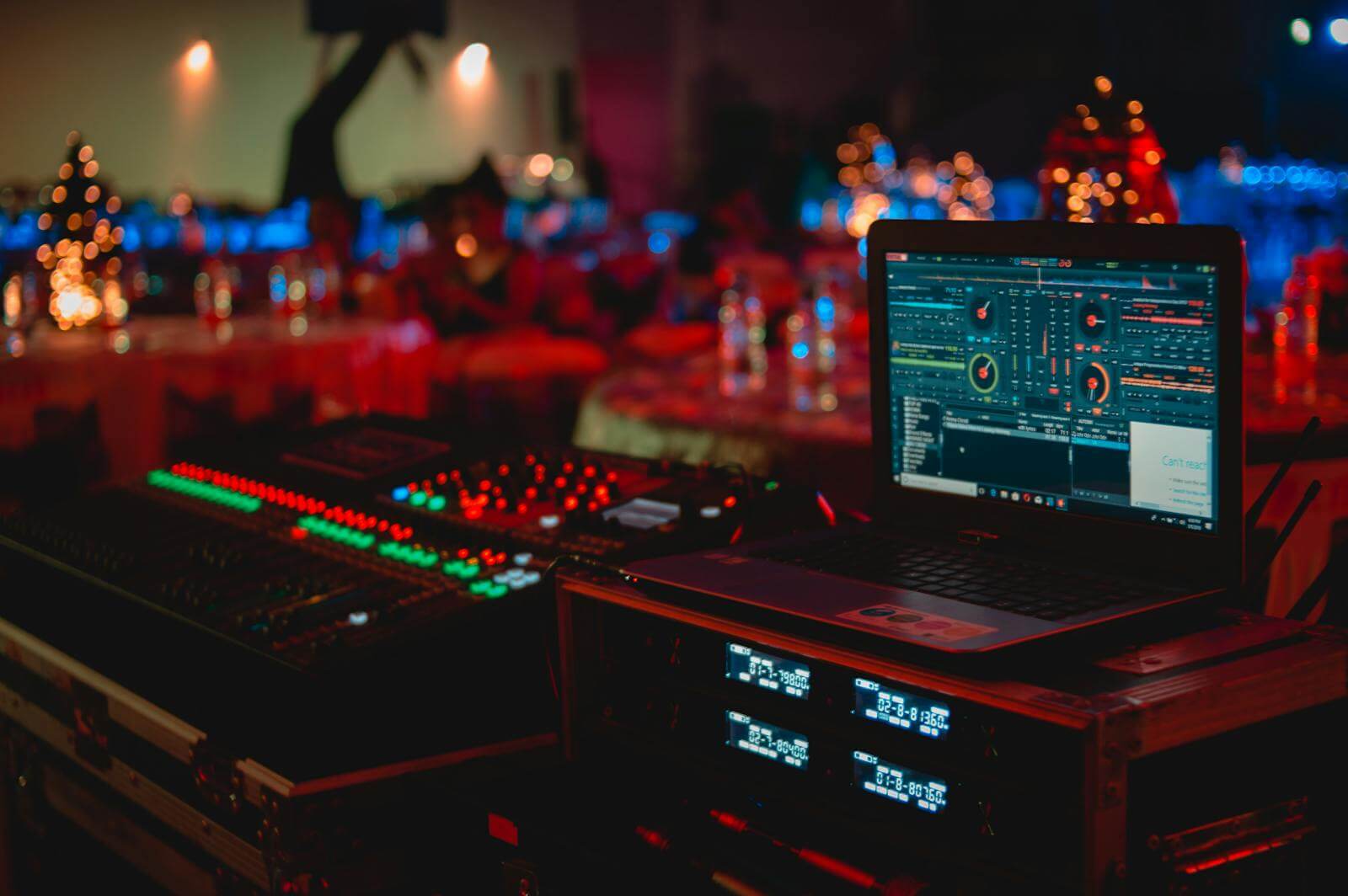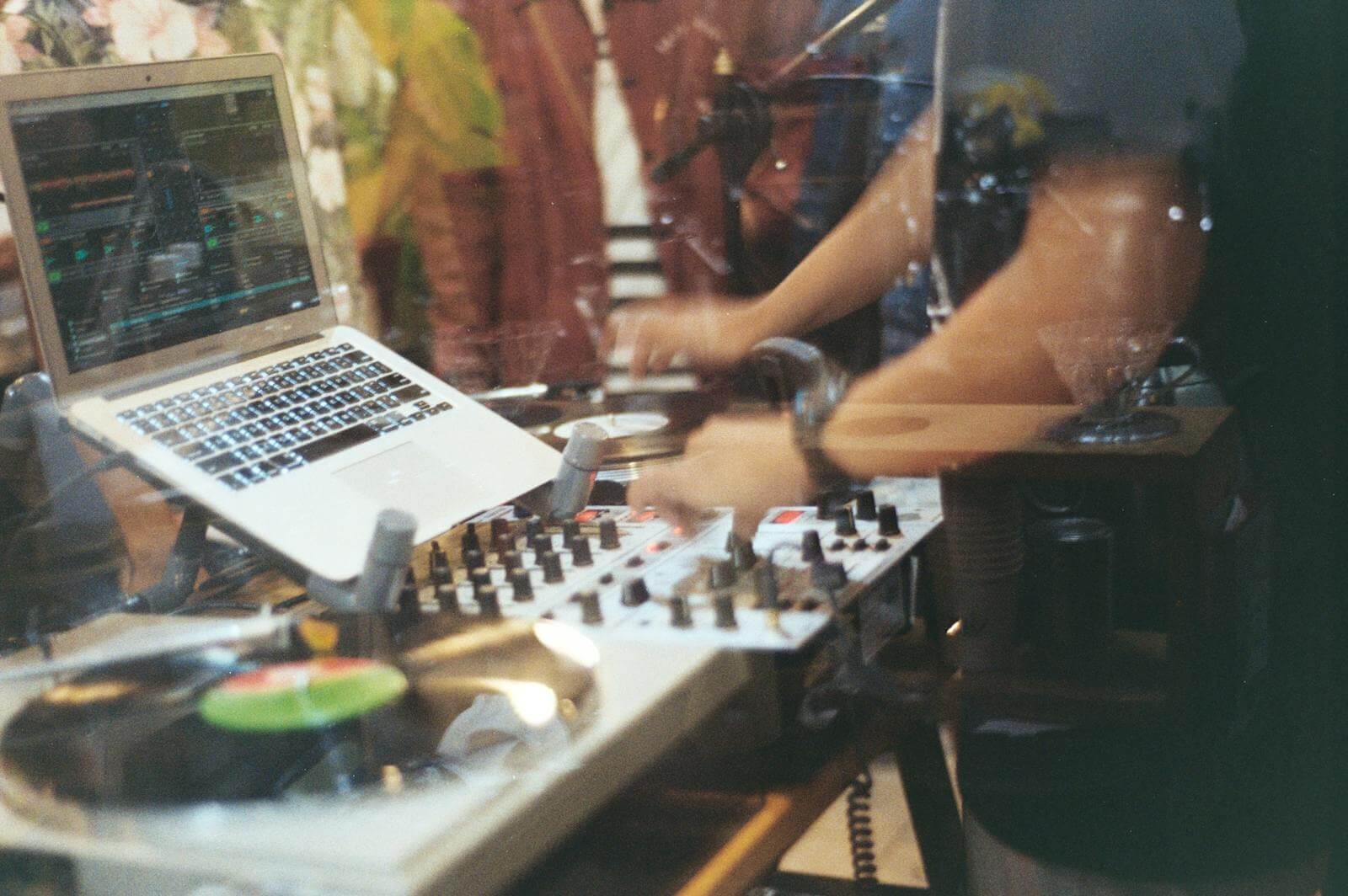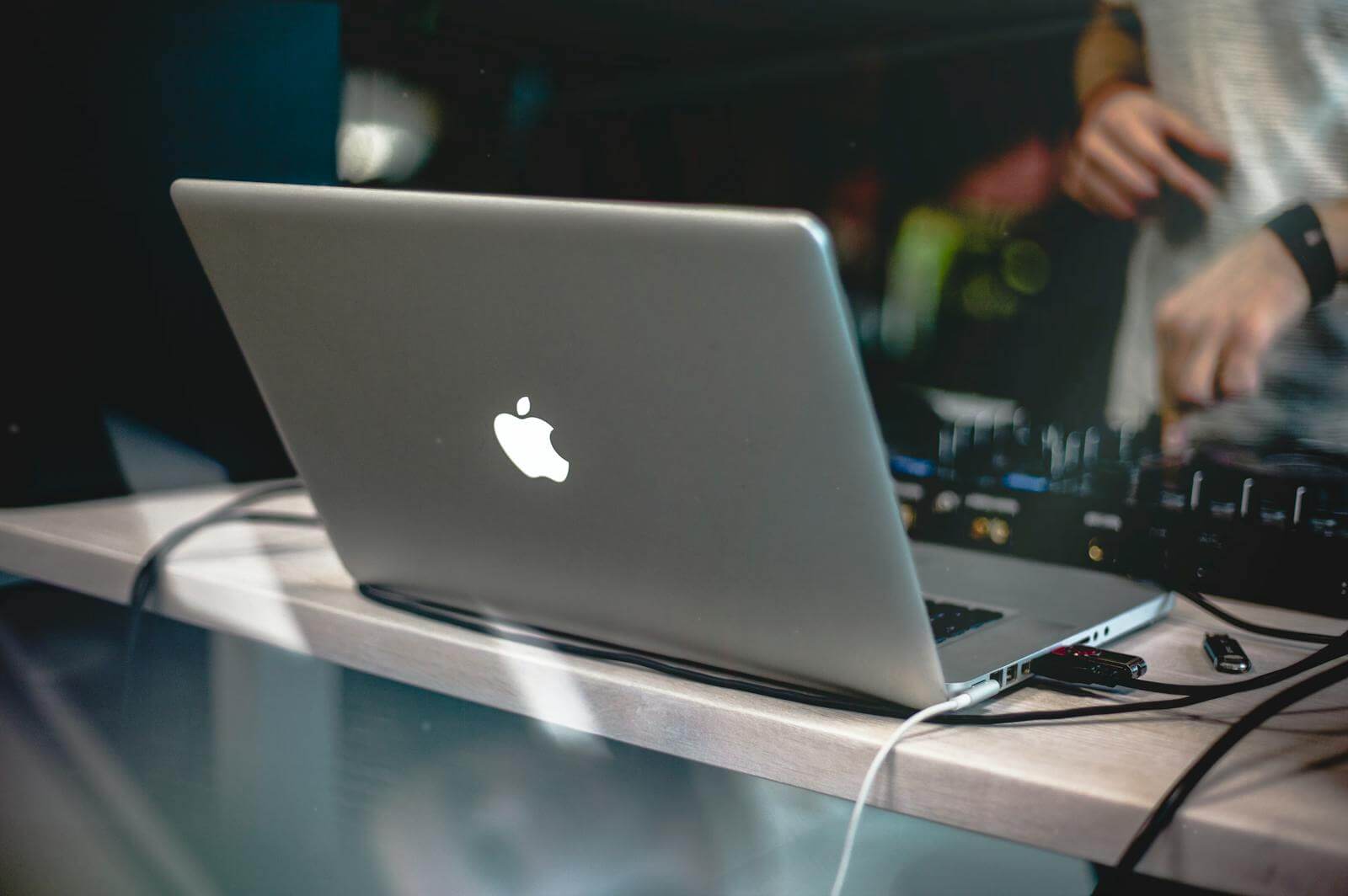
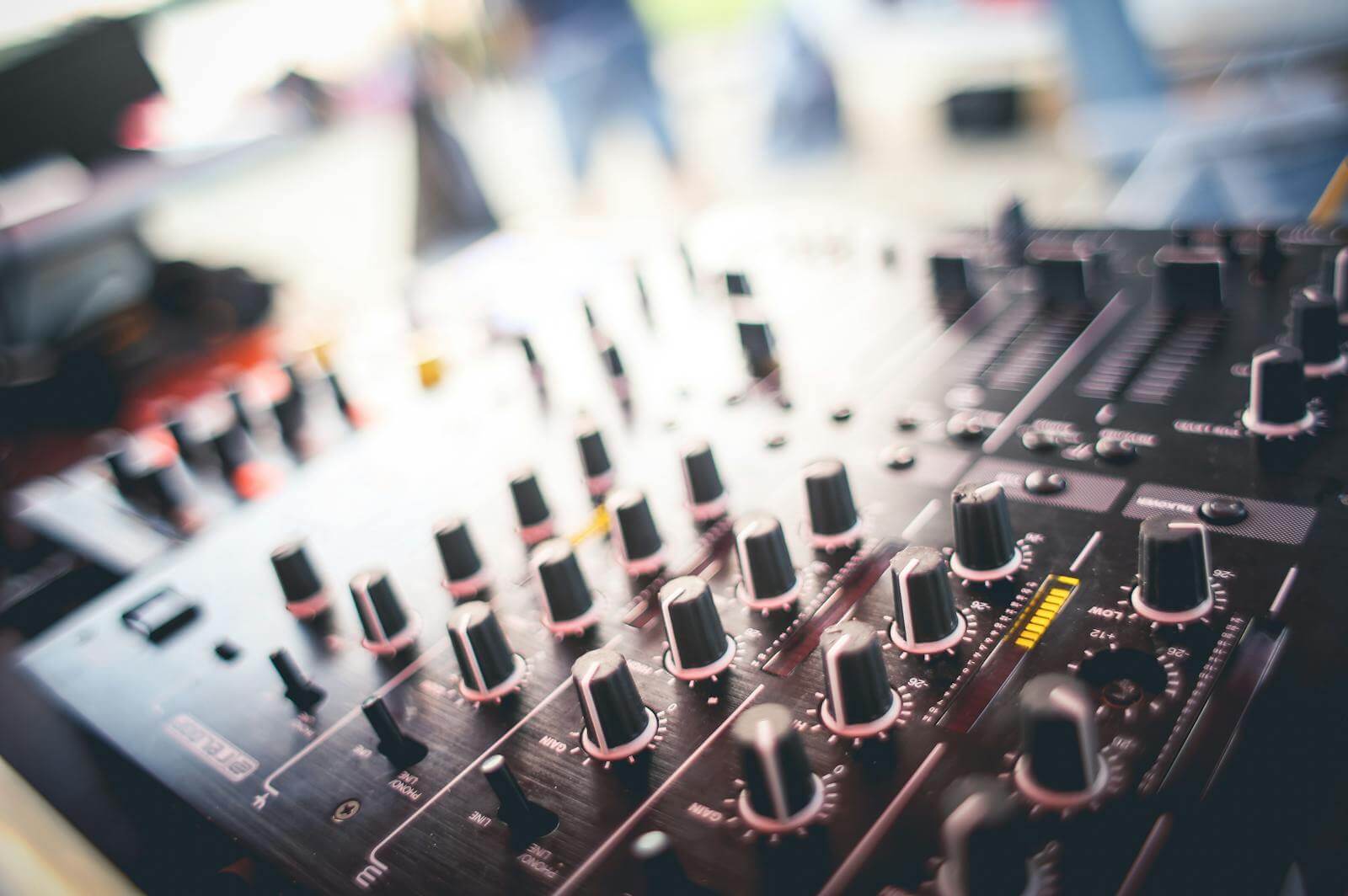
There isn’t “one” best mixer for a Latin and urban DJ—there’s the best mixer for your style of DJing. A club DJ, a DJ who scratches, and a DJ who performs at weddings don’t have the same needs. Here are the three main categories of equipment, along with their strengths and limitations, and the models I see most often in the DJ booth.
What a Latin and urban DJ looks for in a turntable
- Filters and musical effects: essential for transitioning between styles with very different tempos, from bachata to dembow.
- A good crossfader: for the sharp cuts and scratches typical of hip-hop and reggaeton.
- At least two channels, ideally four: for layering vocals, instrumentals, and effects.
- Compatibility with your software: in my case, Serato DJ Pro.
1. The club mixing console
This is the standard setup for DJ booths: a 4-channel mixer connected to CD players (CDJs) or turntables. Pioneer DJ’s current flagship model is the DJM-A9, the successor to the famous DJM-900NXS2. It features 32-bit converters, a MAGVEL FADER crossfader, Sound Color FX and Beat FX effects, and two USB ports for easily mixing back-to-back with another DJ.
Who is it for? DJs who perform at clubs and festivals. Knowing how to use it is essential, since that’s what you’ll find there.
Please note: With Serato DJ Pro, using CDJs in HID or DVS mode requires a Serato DJ Pro license.
2. The DJ-oriented mixing console
Two channels, an ultra-responsive crossfader, and performance pads on the deck: this is the go-to tool for DJs who put scratching at the heart of their sets. Pioneer DJ’s DJM-S series and Rane decks like the Seventy-Two are designed for Serato DJ Pro, with direct control over numerous features, including stems.
Who is it for? Hip-hop and open-format DJs who use turntables or vinyl controllers and enjoy performance routines.
Note: Two tracks are enough for scratching, but they limit complex layering.
3. The All-in-One Controller
The controller combines the mixer, two or four decks, and the sound card into a single unit. The high-end models are no longer “entry-level” by any means. The DDJ-FLX10, for example, is a 4-channel controller compatible with Serato DJ Pro, featuring CDJ-sized jog wheels, DJM-quality effects, and color-coded stem buttons.
Who is it for? Mobile DJs (weddings, private events, corporate parties) and anyone who wants a complete, portable setup that’s quick to set up.
Note: At club events, the controller must find a place in the booth, either next to or in place of the existing equipment. Always notify the organizer in advance.
Summary Table
| Type | Strengths | Limitations | Ideal for |
|---|---|---|---|
| 4-way club table | Standard cabins, full amenities, high-end sound | Requires drives or turntables | Clubs, festivals |
| 2-channel scratch deck | Highly precise crossfader, performance pads | Only two lanes | Hip-hop, open format, performances |
| All-in-one controller | Complete, portable, accessible stems | Bulky in the club cabin | Private Events, Mobile DJ |
My advice
Learn about the equipment that’s right for your gigs, but also practice regularly on a club setup. When a club books you, you need to feel comfortable with the setup right away—without needing time to adjust. Personally, I use Serato DJ Pro on all compatible controllers and setups, from all-in-one controllers for private events to club setups with CDJs.
Frequently Asked Questions
Do we really need four lanes?
No. Two tracks are enough for most sets. Four tracks come in handy for mashups, layered acapellas, and long transitions between multiple tracks.
Is a club table suitable for weddings?
It works perfectly, but it requires players or a computer running DVS, which means more equipment to carry. For a mobile DJ, a high-end controller is often more practical.
Your Event, My Equipment
Whether it's a club, festival, or private event: I'll adapt to the existing equipment or bring my own. Check out photos from my gigs, and to learn more, read about why the sound card is so important.